 Jinal Vora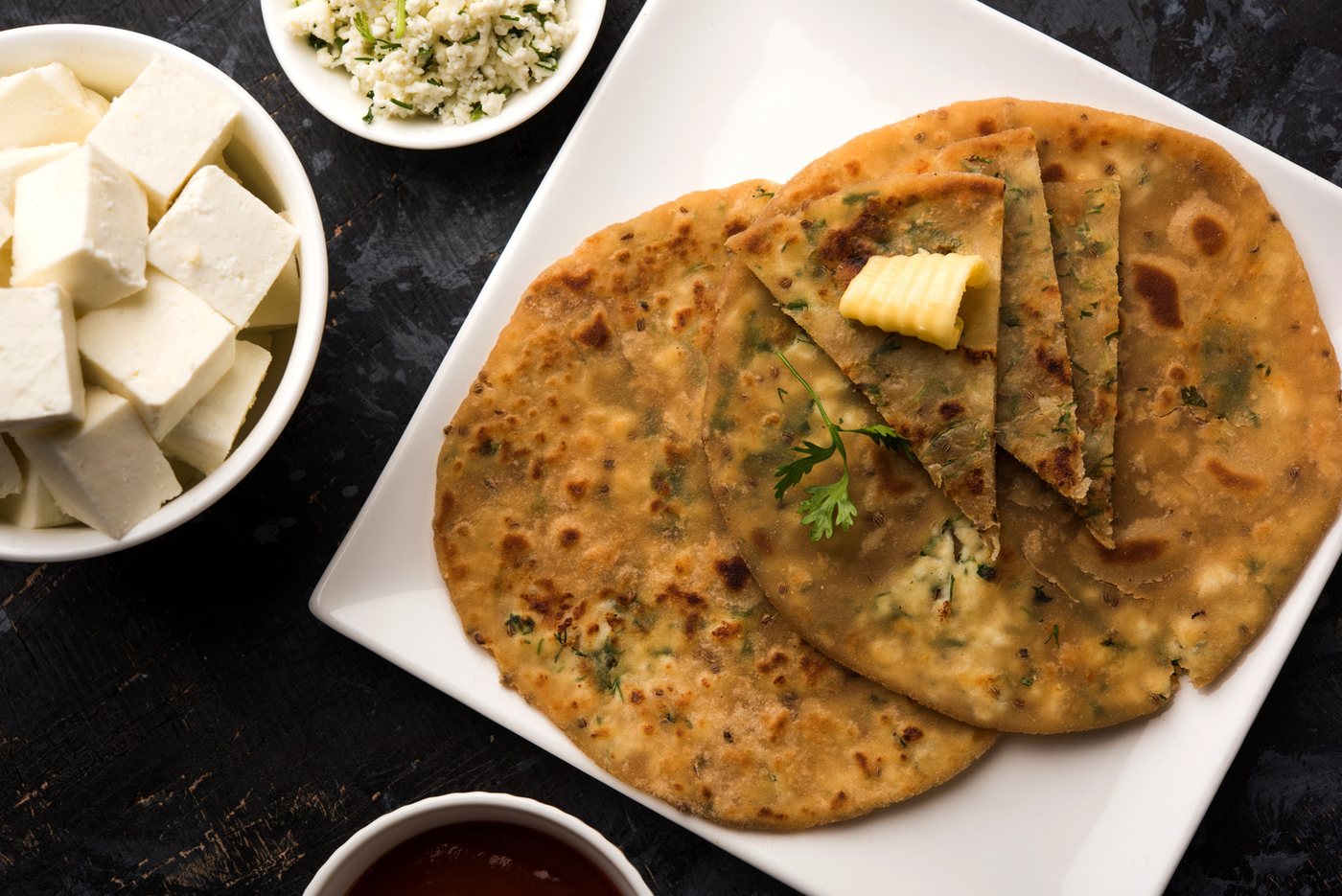
- Prep20 minutes
- Cook15 minutes
- MakesServes 2
- Protein13 g
- Energy299 kcal
Method
- Dough Knead the bajra flour with warm water into a soft dough. Work it for a few minutes, since bajra has no gluten and needs the handling to hold together.
- Filling Mix the crumbled paneer with the cumin powder and salt.
- Stuff Take a ball of dough, flatten it in your palm, place the filling in the centre and close the edges over it. Pat it out gently rather than rolling hard.
- Cook Cook on a hot pan until golden brown on both sides, pressing lightly at the edges.
Warm water, not cold. Bajra has no gluten to bind it, and warm water gelatinises some of the starch so the dough holds. This is the single thing that makes bajra roti workable. Pat, do not roll. Rolling hard cracks the edges. Patting between your palms or between two sheets of parchment works better.
Why this works
Bajra is one of the grains that fell out of urban Indian kitchens and is slowly coming back, usually with more enthusiasm than technique. It is worth eating. It is also genuinely harder to work with than wheat, and knowing why saves a frustrating afternoon.
Why bajra dough behaves differently
Wheat contains gluten, a protein network that stretches and traps air, which is what lets you roll a chapati thin without it falling apart. Bajra has none. Nothing is holding the dough together except starch and water, which is why a bajra roti cracks at the edges the moment you treat it like a chapati.
Two things fix this. Knead with warm water rather than cold, which gelatinises some of the starch and gives the dough something to bind with. And pat the roti out between your palms, or between two sheets of parchment, rather than rolling it hard with a pin.
What bajra brings that wheat does not
Pearl millet carries considerably more iron and magnesium than refined wheat flour, along with around 11 g of fibre per 100 g. It is also entirely gluten free, which makes it genuinely useful for a household managing coeliac disease rather than merely fashionable.
Its glycaemic response is gentler than refined flour as well, though portion still matters. A large bajra roti is still a substantial amount of carbohydrate.
The paneer is where the protein is
Half a cup of crumbled paneer carries around 11 g of protein, and it is doing most of the work in this recipe. Bajra contributes some, but the reason this lunch holds you is the cheese.
Use fresh paneer if you can. If you are buying it, the firmer blocks crumble better and hold their shape in the stuffing, where softer paneer tends to weep and make the dough wet.
A seasonal grain
Traditional Indian kitchens treat bajra as a winter grain, and that is not superstition. It is dense, warming and slow to digest, which suits cold weather and suits a working body. In peak summer in Mumbai it can sit heavily, and jowar or wheat is the better choice for those months.
Eating with the season is one of the few pieces of traditional food wisdom that holds up well under scrutiny.
Eating it well
A bowl of curd alongside, and a vegetable. The curd adds protein and helps the digestion of a fairly dense roti. A spoon of white butter or ghee on top is traditional and, in a reasonable quantity, entirely reasonable nutritionally.
Frequently asked questions
Why does my bajra roti keep cracking?
Bajra contains no gluten, so there is no protein network holding the dough together. Knead with warm rather than cold water, work the dough for a few minutes, and pat the roti out with your palms instead of rolling it hard.
Is bajra roti gluten free?
Yes, pearl millet contains no gluten. If the sensitivity is coeliac disease rather than a preference, check that the flour has not been milled alongside wheat.
Can I mix bajra with wheat flour?
Yes, and it makes the dough far easier to handle. A half and half mix rolls almost like a normal chapati. You give up the gluten free property, so this only suits a household without coeliac disease.
Is bajra suitable in summer?
It is a dense, warming grain and traditionally a winter one. In peak summer many people find it heavy, and jowar or wheat sits more comfortably. This is one piece of seasonal food wisdom worth following.
Can I use tofu instead of paneer?
Yes. Firm tofu, crumbled and squeezed dry, works well and makes the recipe vegan. Season it a little more assertively, since it carries less flavour of its own than paneer.
This recipe is general nutrition education, not a prescription. Portions and ingredients may need adjusting for kidney disease, allergies or a condition you are being treated for. Reviewed by Jinal Vora.
Cook next
More from the kitchen