 Jinal Vora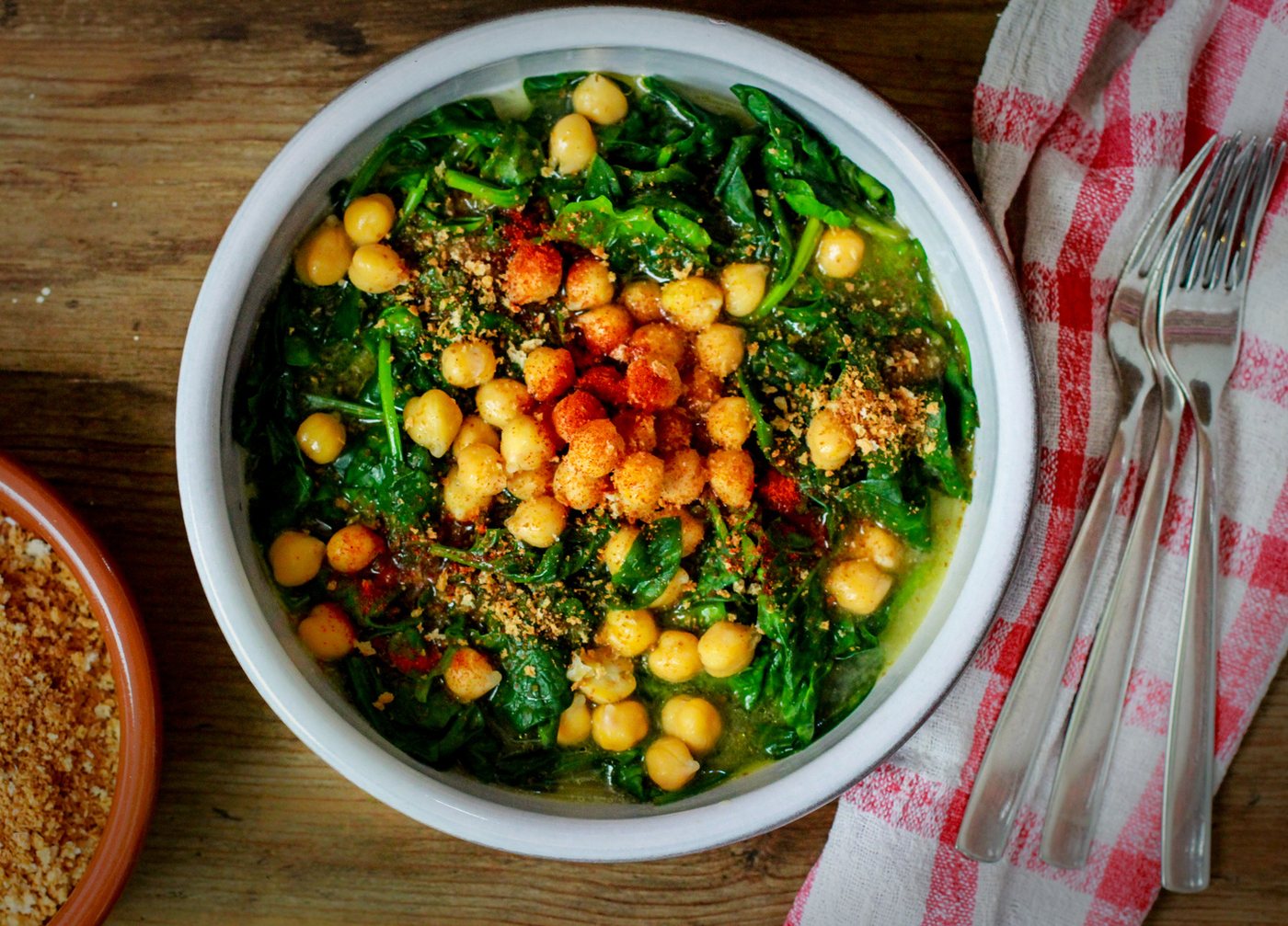
- Prep10 minutes
- Cook15 minutes
- MakesServes 2
- Protein5 g
- Energy101 kcal
Method
- Saute Warm the oil and cook the garlic for thirty seconds until it smells sweet rather than raw.
- Build the base Add the tomato and cook until it softens and the oil begins to separate, then add the spinach and let it wilt down.
- Simmer Add the chickpeas and your masala, and cook for five minutes so the flavours settle.
- Serve warm, with roti or rice.
Add lemon at the table. The vitamin C substantially improves how much of the spinach iron you absorb, and it is wasted if you add it during cooking. Not a Jain recipe. Leave the garlic out and use asafoetida with the cumin instead. The curry loses nothing structural.
Why this works
This is a fifteen minute curry, and its real value is that it fits into an evening rather than demanding one. It is also one of the better vegetarian sources of iron on a plate, provided you handle it correctly, which most people do not.
The iron question, handled properly
Spinach carries a useful amount of iron, but it is non haem iron, the plant form, and your body absorbs it far less efficiently than the iron in meat. Absorption can be as low as two to five per cent left to itself.
Two things change that substantially. Vitamin C taken with the meal can multiply absorption several times over, which is why the lemon at the table matters more than it looks. The tomato in the curry helps for the same reason. And tannins in tea and coffee do the opposite, binding the iron so you absorb less, which is why a cup of chai with dinner quietly undoes the good work.
Keep tea and coffee an hour either side of this meal. That single habit does more for a borderline haemoglobin than most supplements people buy themselves.
Why it is only 100 calories
There is very little fat and no cream, so this is light by construction. That is useful when the rest of the plate is doing the heavy lifting, but it does mean the curry is not a meal on its own. Eat it with roti, rice or millet, and preferably with curd if you eat dairy, which lifts the protein.
If you want it to carry more, double the chickpeas. The recipe as written is fairly modest at half a cup between two people.
Cook the tomato properly
The step people rush is the tomato. Give it long enough to break down and for the oil to visibly separate at the edges. That is the point at which the raw acidity has cooked off and the base tastes finished rather than sharp. It takes three or four minutes and it is the difference between this curry tasting of something and tasting thin.
Spinach, and not overcooking it
Spinach wilts in under a minute and continues cooking in the residual heat. Add it late, let it collapse, and take the pan off. Long cooked spinach loses folate and vitamin C, and the texture turns to slurry.
If you are using frozen spinach, squeeze the water out first or the curry will be watery no matter how long you cook it.
For a Jain kitchen
Leave the garlic out. Start with hot oil and cumin seeds, add a generous pinch of asafoetida, then the tomato. The curry loses nothing structural, and the asafoetida gives you the savoury base the garlic was providing.
Frequently asked questions
How do I get more iron out of the spinach?
Squeeze lemon over it at the table rather than during cooking, and keep tea or coffee an hour away from the meal. Vitamin C substantially improves absorption of plant iron, and the tannins in tea substantially reduce it.
Can I use frozen spinach?
Yes, but squeeze the water out thoroughly first, otherwise the curry will be watery however long you cook it. Add it later than you would fresh, since it is already partly cooked.
Is this enough for a meal?
Not on its own at around 100 calories a serving. Eat it with roti, rice or millet, and add curd if you eat dairy. Doubling the chickpeas is the easiest way to make the curry itself more substantial.
How do I make it Jain friendly?
Leave out the garlic and use a generous pinch of asafoetida bloomed in hot oil with cumin seeds instead. The base tastes savoury and complete, and nothing else about the method changes.
Can I make it in advance?
It keeps two days in the fridge and the flavour improves overnight, though the spinach dulls in colour. Reheat gently rather than boiling it again.
This recipe is general nutrition education, not a prescription. Portions and ingredients may need adjusting for kidney disease, allergies or a condition you are being treated for. Reviewed by Jinal Vora.
Cook next
More from the kitchen