 Jinal Vora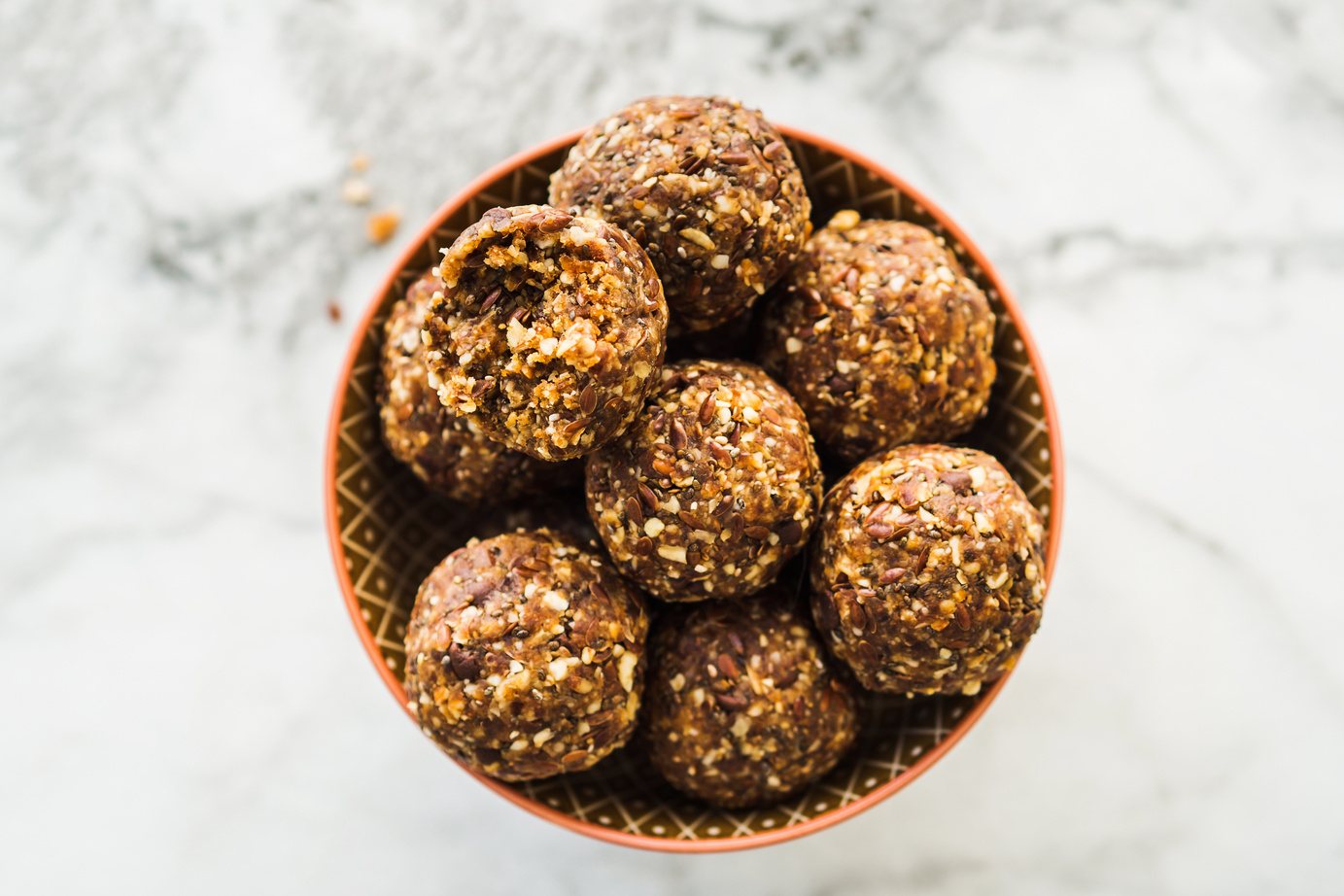
- Prep15 minutes
- CookNo cooking
- MakesMakes about 10
- Protein4 g
- Energy124 kcal
Method
- Blend Put the roasted peanuts, jaggery and cardamom into a blender and run it until you have a coarse paste that holds together when pressed.
- Check it binds If the mixture is too dry to hold, add a date or two and blend again rather than adding water.
- Shape Roll into small balls, pressing firmly so they hold.
- Store in an airtight jar.
Jaggery is still sugar. It carries a little iron and some minerals that white sugar does not, but the body handles it much the same way. One ball is a snack. Four is a dessert. If the mix will not bind, add dates rather than water. Water makes them go off within days.
Why this works
Almost every client who tells me their diet falls apart in the evening is describing the same window: somewhere between four and six, when the last meal was hours ago and dinner is hours away. What you keep in the house for that window matters more than almost anything you plan for breakfast.
Why these work as a snack
Peanuts bring protein and fat. That combination is what makes a small snack actually satisfying, as opposed to a biscuit which is starch and sugar and leaves you looking for another one twenty minutes later.
At roughly 4 g of protein and 7 g of fat a ball, one of these does a job. The portion is small on purpose.
The honest bit about jaggery
Jaggery has a reputation it has not entirely earned. It is unrefined, so it retains small amounts of iron, potassium and magnesium that white sugar has stripped out. That is a genuine difference and it is a modest one.
Metabolically, jaggery is still sucrose. It raises blood sugar in much the same way as white sugar does. Half a cup across ten balls is not extravagant, and the peanuts alongside it slow the release considerably, but nobody should eat these believing the jaggery makes them a health food.
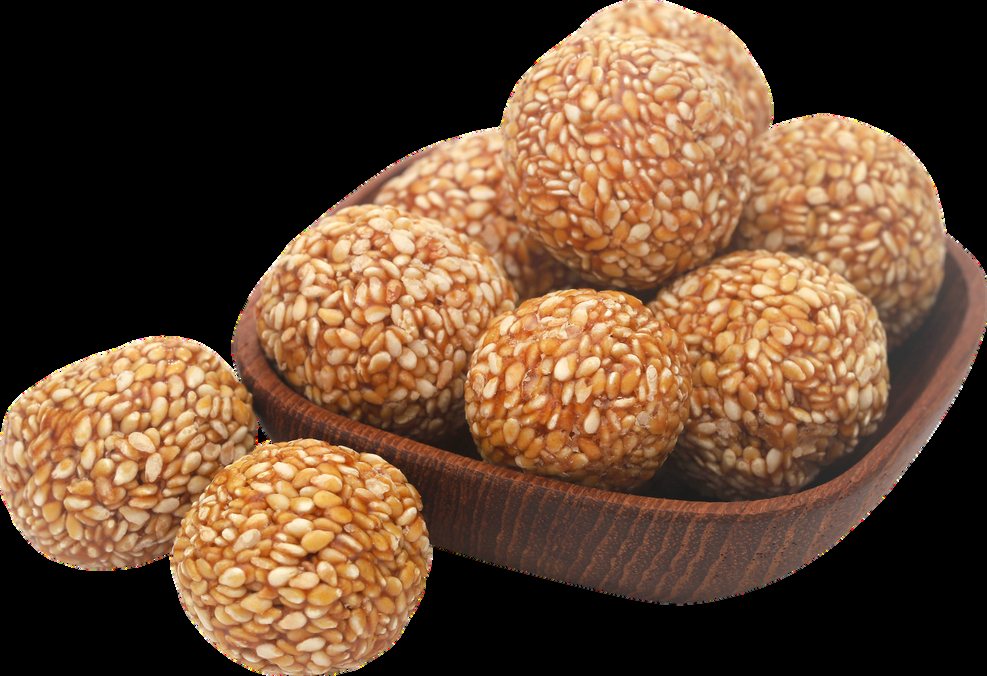
If you are managing diabetes or insulin resistance, this is not your snack. The sesame and almond laddoo elsewhere in this collection uses dates rather than jaggery and comes with more fibre, which makes it the gentler choice.
Portion is the whole discipline
These are easy to eat. That is the risk. One ball is a snack at around 124 calories. Four is a dessert at close to 500, and the difference between those two outcomes is entirely whether you took one out of the jar and closed it.
Keep them in a small jar rather than a large one. It sounds trivial and it works.
Getting the texture right
Blend to a coarse paste rather than a smooth butter. You want some texture left in the peanut, both for the eating and because over blending releases so much oil that the mixture turns greasy.
If it will not hold together when you press it, add a date or two and blend again. Do not add water. Water shortens how long they keep from a fortnight to a few days, and it will not help the binding much anyway.
Storage
An airtight jar at room temperature for about ten days, or three weeks in the fridge. If you have used dates to bind them, keep them refrigerated.
Frequently asked questions
Is jaggery healthier than white sugar?
Marginally. It retains small amounts of iron, potassium and magnesium that refining removes, but it is still sucrose and raises blood sugar in much the same way. It is a better choice, not a health food.
Can I eat these if I have diabetes?
These are not the right snack for you. Half a cup of jaggery across ten balls is a meaningful amount of sugar even with the peanuts slowing it. The sesame and almond laddoo, which uses dates and carries more fibre, is the gentler option.
My mixture will not hold together. What do I do?
Add one or two dates and blend again. Avoid adding water, which barely helps the binding and cuts the shelf life from a fortnight down to a few days.
How many should I eat?
One is a snack at around 124 calories. These are very easy to eat several of without noticing, so keep them in a small jar rather than a large one.
How long do they keep?
About ten days in an airtight jar at room temperature, or three weeks refrigerated. If you used dates to bind them, keep them in the fridge.
This recipe is general nutrition education, not a prescription. Portions and ingredients may need adjusting for kidney disease, allergies or a condition you are being treated for. Reviewed by Jinal Vora.
Cook next
More from the kitchen