 Jinal Vora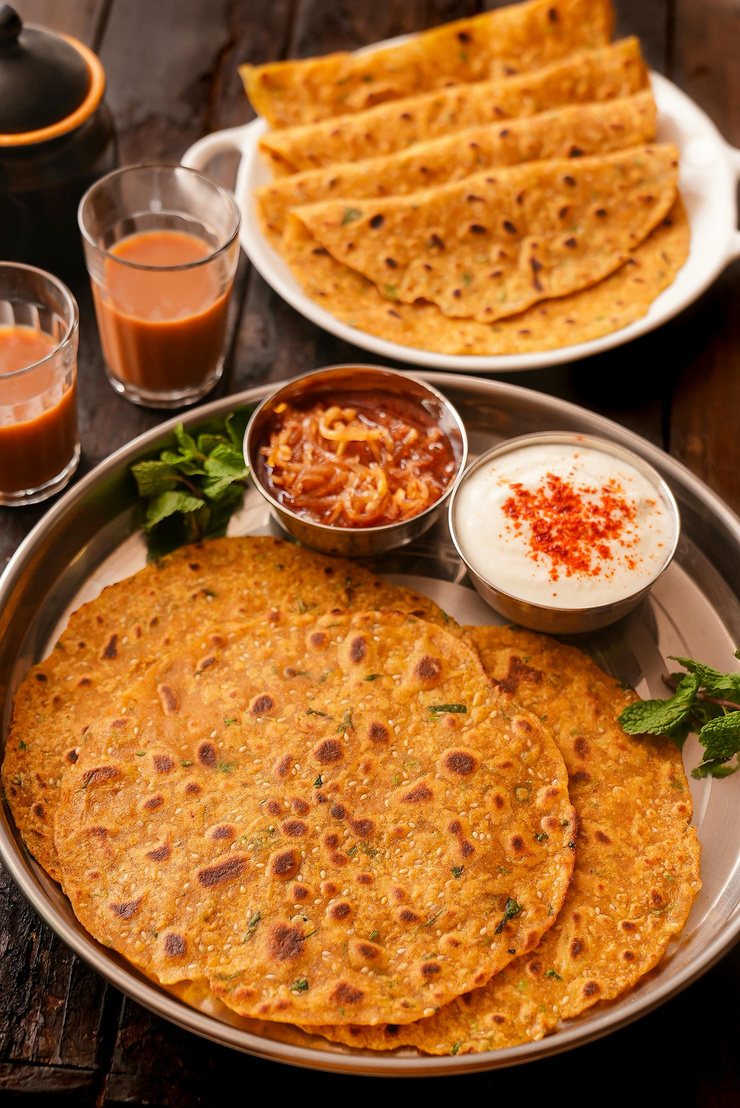
- Prep15 minutes
- Cook15 minutes
- MakesServes 2
- Protein12 g
- Energy274 kcal
Method
- Dough Knead the flour, chopped methi, turmeric and salt into a soft dough, using as little water as the methi will allow. The leaves release water as they sit.
- Rest Let the dough rest for ten minutes so the flour hydrates and the methi softens.
- Cook Roll into theplas and cook on a hot pan, turning once, until brown spots appear on both sides.
- Raita Stir the ground flaxseeds through the yogurt with a pinch of salt and cumin powder.
- Serve the theplas warm with the flaxseed raita.
Grind the flaxseed. Whole flaxseed passes through you largely intact and you get almost none of the omega 3. Grind it fresh, or buy ground and keep it in the fridge, since the oils turn rancid quickly. Methi is bitter for a reason. If it is too much, use half the quantity and add a spoon of curd to the dough rather than reaching for sugar.
Why this works
Thepla is the food Gujarati families pack for train journeys, and it earned that role honestly. It keeps without refrigeration for a day or more, it does not go soggy, and it is eaten at room temperature without complaint. What makes this version better than most is the raita sitting next to it.
Grind the flaxseed or do not bother
This is the single most important line in the recipe. Flaxseed has a hard outer shell that human digestion does not break down. Swallow the seeds whole and they pass through you essentially intact, taking the omega 3 fats and lignans with them.
Grind them. A coffee grinder or a small mixer jar does it in seconds. Once ground, the oils oxidise quickly, so grind small quantities fresh or keep the ground seed in an airtight jar in the fridge and use it within a fortnight.
Why methi, and why the bitterness matters
Fenugreek has one of the longer records in Indian food for its effect on blood sugar, and the modern evidence, while not dramatic, is real. Both the leaves and the seeds contain soluble fibre and compounds that appear to slow carbohydrate absorption.
The bitterness is not a flaw to be corrected. People routinely reduce the methi and add sugar or extra oil to compensate, which trades away the reason for eating it. If it is genuinely too strong, use half the quantity and add a spoon of curd to the dough, which rounds the edge without masking it.
Why it keeps
A thepla lasts because it is low in moisture and cooked with a little fat, which slows the staling and keeps bacteria from getting comfortable. This is preservation by technique rather than refrigeration, and it is worth appreciating. It is also why theplas should be cooked properly on both sides rather than pulled off pale.
Cool them completely before stacking them or the trapped steam makes them soggy and shortens how long they keep.
The raita is doing real work
Half a cup of curd carries around 4 g of protein and a useful dose of live cultures. Stir the ground flaxseed through it and you have added the omega 3 fats that an Indian vegetarian diet is most often short of, along with more fibre.
Treating the raita as optional is the common mistake. The theplas alone are mostly carbohydrate. The pairing is the meal.
Who should be careful
Flaxseed has a mild blood thinning effect in quantity, so if you are on anticoagulant medication, mention it to your doctor before eating it daily. Methi in large amounts can affect blood sugar noticeably, which is welcome for most people and worth watching if you are already on glucose lowering medication.
Frequently asked questions
Should I use whole or ground flaxseed?
Ground, always. Whole flaxseed has a shell that human digestion cannot break down, so the seeds pass through largely intact and you get almost none of the omega 3 or lignans. Grind fresh, or store ground seed in the fridge and use it within a fortnight.
How long do theplas keep?
A day or more at room temperature, which is why they are the traditional travelling food. Cool them completely before stacking, since trapped steam makes them soggy and shortens their life.
My theplas are too bitter. What should I do?
Use half the methi and add a spoon of curd to the dough. Avoid the common fix of adding sugar or extra oil, which trades away the reason for eating methi in the first place.
Is methi good for blood sugar?
Fenugreek has a long traditional association with blood sugar and the modern evidence is real if modest. It is a helpful addition rather than a treatment, and if you are on glucose lowering medication it is worth mentioning to your doctor.
Can I make this without dairy?
The theplas are dairy free already. For the raita, a thick coconut or soy curd works, though the protein will be lower depending on which you choose.
This recipe is general nutrition education, not a prescription. Portions and ingredients may need adjusting for kidney disease, allergies or a condition you are being treated for. Reviewed by Jinal Vora.
Cook next
More from the kitchen