 Jinal Vora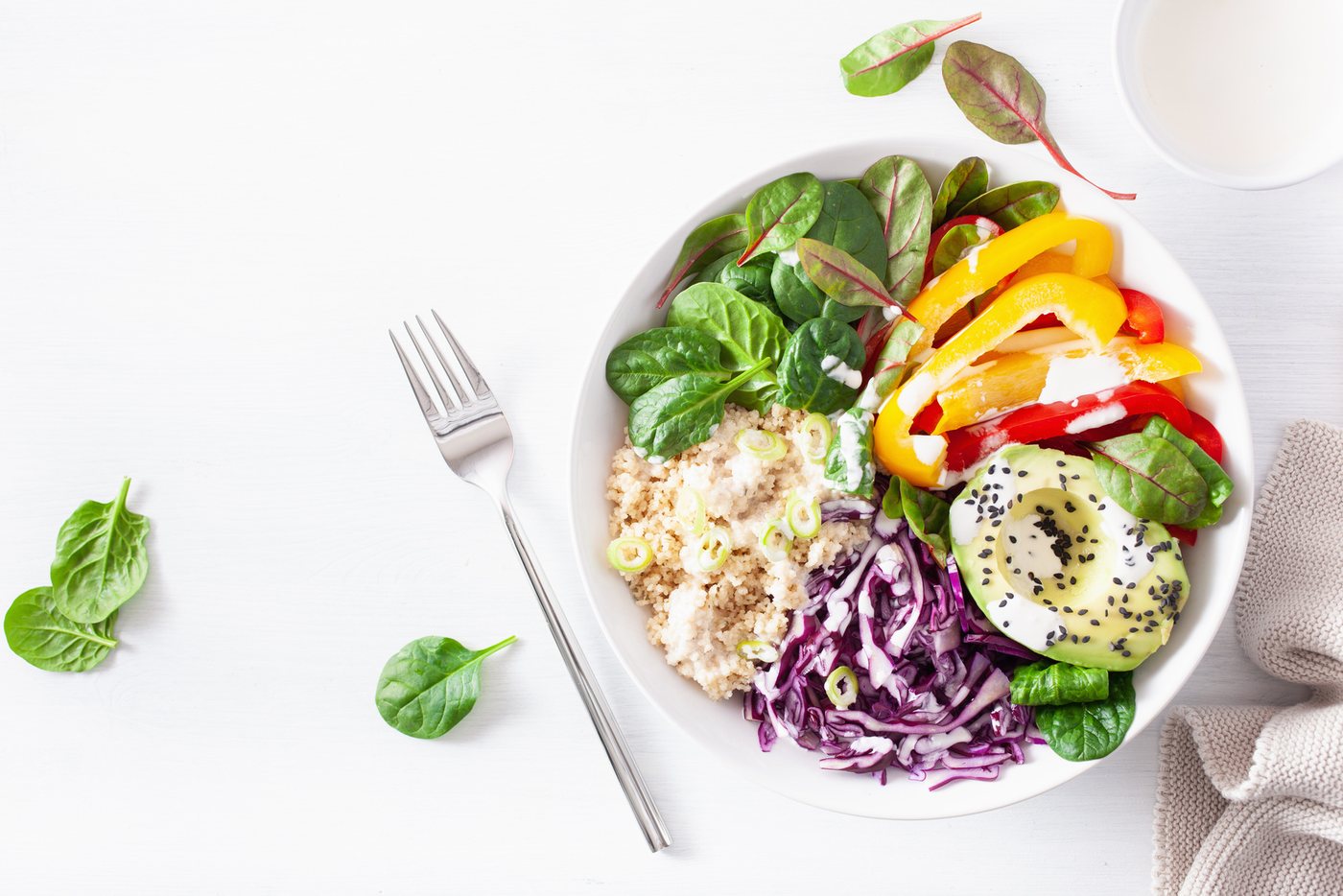
- Prep10 minutes
- CookNo cooking
- MakesServes 1
- Protein16 g
- Energy451 kcal
Method
- Arrange Put the quinoa down first, then arrange the chickpeas, broccoli and avocado in sections on top rather than mixing them through.
- Dress Spoon the hummus into the middle, then drizzle with lemon juice and olive oil and season.
- Eat straight away, while the broccoli still has some bite.
Seventeen grams of fibre is a lot. If your usual diet is low in fibre, build up to this bowl rather than starting here, or you will be uncomfortable for an afternoon. Batch it. Chickpeas, quinoa and broccoli all keep three days. Store them separately and assemble in three minutes.
Why this works
A bowl like this gets dismissed as a Western import, and the objection is fair enough if it means paying six hundred rupees for a café version. Made at home from chickpeas and quinoa it is neither expensive nor foreign. It is a thali logic, several things on one plate, arranged differently.
Why arrange it rather than mix it
This sounds cosmetic and is not entirely. Keeping the components in sections means each mouthful is slightly different, and people eat more slowly and notice their food more when that is true. Slower eating is one of the most reliable things I can ask a client to do, and it costs nothing.
It also means you can see the proportions. If the grain section is twice the size of everything else, the bowl will tell you.
Seventeen grams of fibre in one sitting
Between the chickpeas, the broccoli, the quinoa and the avocado, this bowl carries around 17 g of fibre. Most adults should be getting 25 to 30 g in a day and most of the people I see are managing about half of that.
A word of caution that matters more than it sounds: if your current diet is low in fibre, do not start here. A gut that has been running on refined flour for years will protest loudly at 17 g arriving at once. Build up over two or three weeks and the same bowl becomes comfortable.
The fat is doing a job
Half an avocado, a spoon of hummus and a drizzle of olive oil put roughly 21 g of fat into this bowl, and that is deliberate. Fat slows gastric emptying, which is what keeps a vegetable heavy meal from leaving you hungry an hour later. It also allows you to absorb the fat soluble vitamins, A, D, E and K, which a fat free salad largely wastes.
This is why the low fat version of a bowl like this is so often unsatisfying, and why people who eat one end up eating again at four.
Building it for the week
Every component keeps. Boil a batch of chickpeas, cook quinoa, steam broccoli until it is just tender and still bright, and store the three separately in the fridge for up to three days. Assembly then takes three minutes, and the avocado is the only thing you cut fresh.
Do not store the avocado cut. It browns within hours regardless of what you do to it.
Making it work harder
If 16 g of protein is not enough for you, and for someone lifting weights or over sixty it may well not be, add paneer or tofu cubes, a boiled egg if you eat them, or simply increase the chickpeas to a full cup. A tablespoon of pumpkin seeds over the top adds protein, zinc and magnesium for very little effort.
Frequently asked questions
What makes a buddha bowl high protein?
The combination rather than any single item. Chickpeas and quinoa together give around 16 g in this version, and adding paneer, tofu or pumpkin seeds pushes it higher. A bowl of only vegetables and grain would not.
Can I prepare this in advance?
Yes. Chickpeas, quinoa and steamed broccoli all keep three days in the fridge if stored separately. Slice the avocado only when you are ready to eat, since it browns within hours.
Is 17 g of fibre in one meal too much?
Not in itself, but it is a lot if your usual diet is low in fibre. Start with half the chickpeas and broccoli, and build up over two or three weeks. Going straight to this from a refined diet usually causes bloating.
Do I have to use quinoa?
No. Millet, barley, brown rice or cooled white rice all work in its place. Quinoa carries a little more protein, but the bowl works on the combination rather than on any one ingredient.
Is this bowl Jain friendly?
Most shop bought hummus contains garlic, so check the label or make it without. Everything else in the bowl is fine, and the dressing can be lemon and olive oil alone.
This recipe is general nutrition education, not a prescription. Portions and ingredients may need adjusting for kidney disease, allergies or a condition you are being treated for. Reviewed by Jinal Vora.
Cook next
More from the kitchen